Van Rysel RCR-R Pro 2027: what Decathlon's lighter race bike means for triathletes
By Trithings · 16 November 2026 · 5 min read
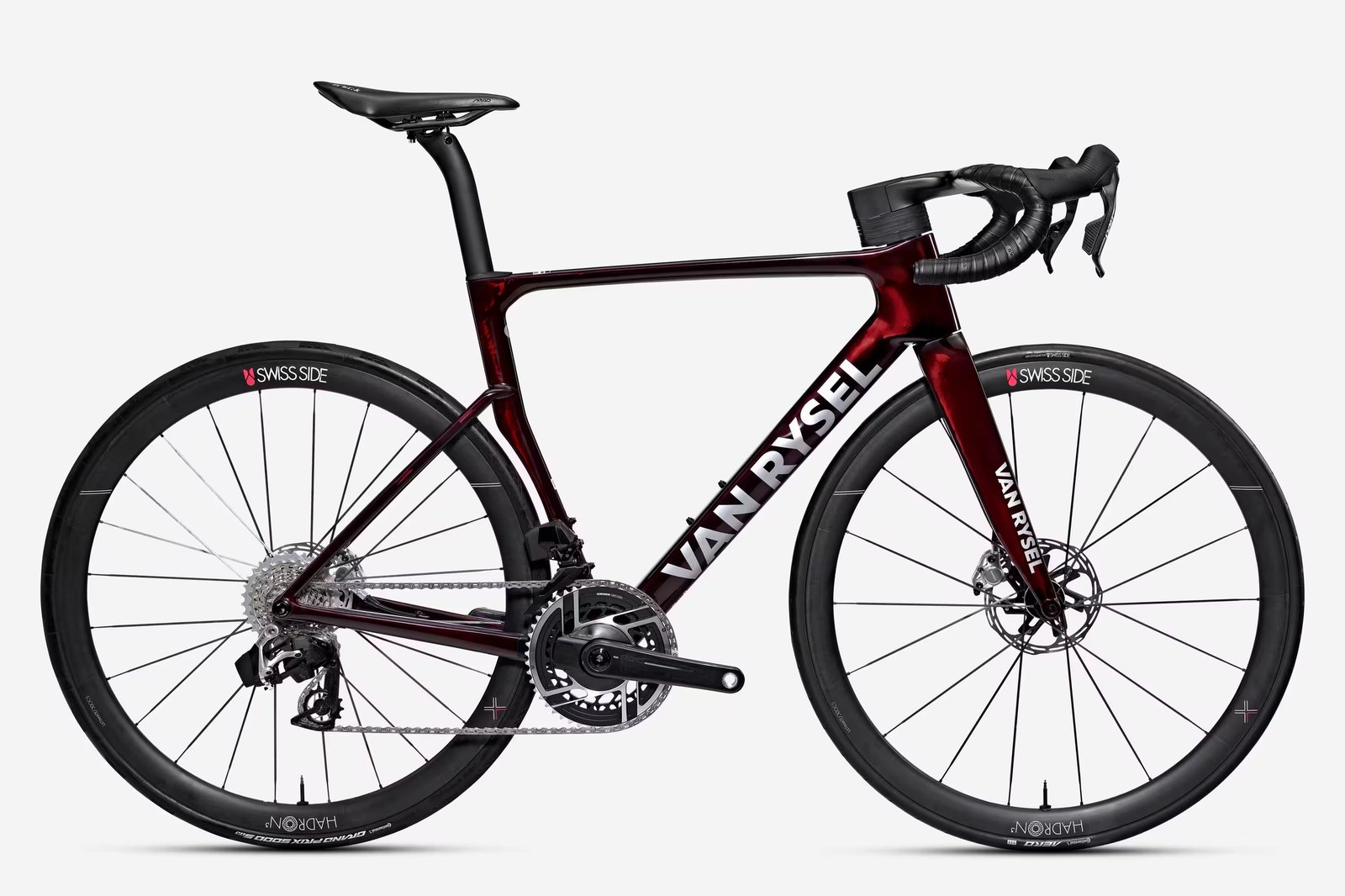
Photo: Van Rysel
Van Rysel, Decathlon's performance bike brand, has announced two new race bikes for 2027: the RCR-R Pro, with its lightest frame yet, and a cheaper RCR-R. They are available from 5 January 2027, with European prices reported from €3,299 to €8,499. Our take for age groupers: interesting if you want one light, fast bike for everything, but wait for the full prices and the geometry chart before you plan around it. If you race mostly flat, non-drafting triathlons, your position on the bike will matter more than a few hundred grams.
What Van Rysel announced
Both bikes share one design and one fork, and Van Rysel says the RCR-R has the same geometry and aerodynamics as the Pro. The difference is the carbon used in the frame, according to Cyclingnews:
- RCR-R Pro: a claimed 705 g frame in size medium. Builds with Shimano Dura-Ace Di2 and Ultegra Di2, or SRAM Red AXS and Force AXS. The lightest complete bike, with SRAM Red, is a claimed 6.6 kg.
- RCR-R: a claimed 883 g frame. Builds with Shimano Ultegra Di2 and 105 Di2, or SRAM Force AXS and Rival AXS, from a claimed 7.4 kg to 7.9 kg.
- Fork: a claimed 360 g on both.
All weights are the brand's own claims for a size medium, with a tolerance of plus or minus 5%, as Rennrad-News points out. Reports differ slightly on the Dura-Ace bike (6.8 kg or 6.9 kg), so treat the small differences between builds loosely.
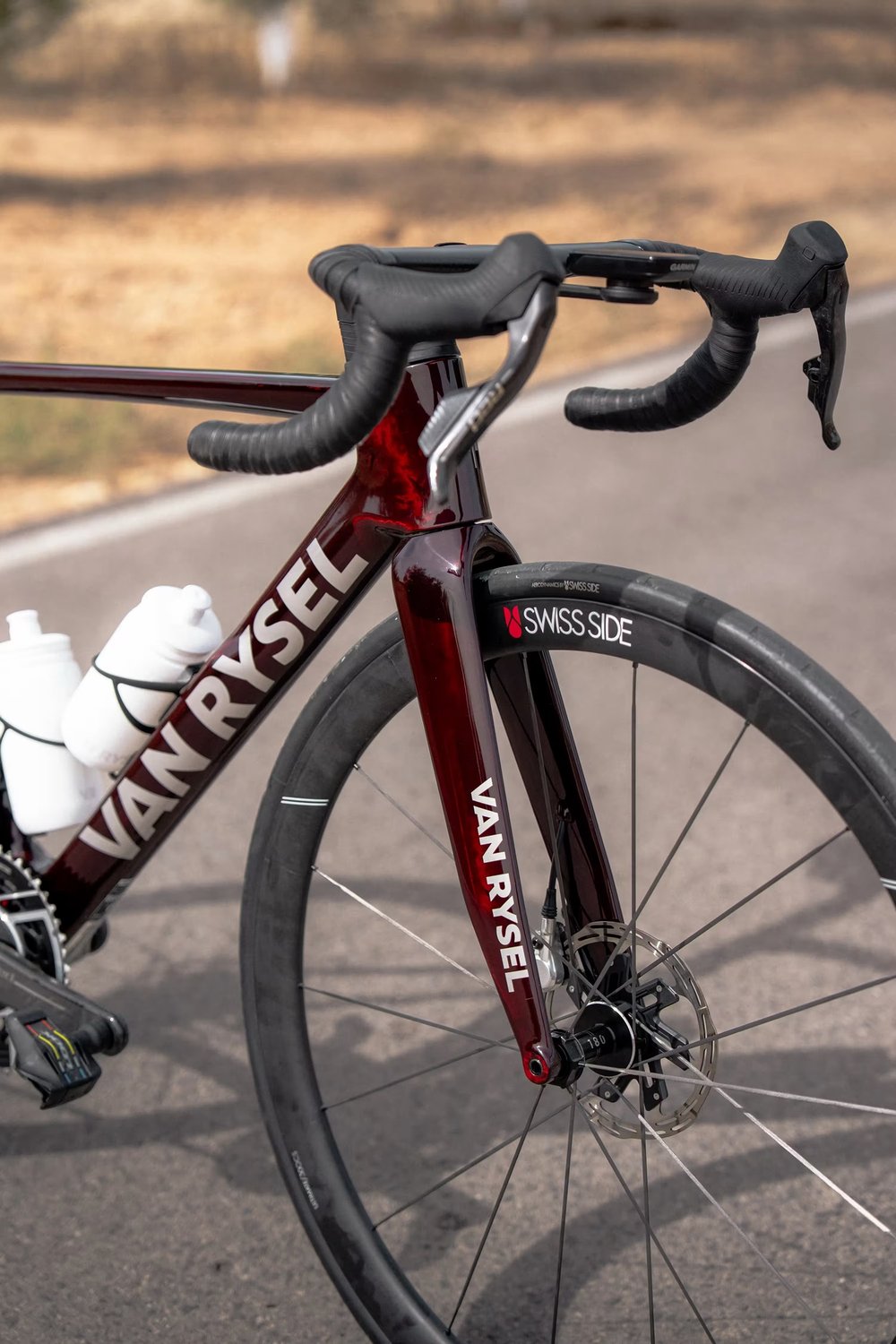
Van Rysel describes the RCR-R as a light, aerodynamic road bike for varied terrain. Its dedicated aero bike is the RCR-F Pro. Development took about two and a half years, with 13 computer airflow simulations, five wind tunnel prototypes and seven frame layups (the way the carbon sheets are stacked), and feedback from the Decathlon CMA CGM pro team.
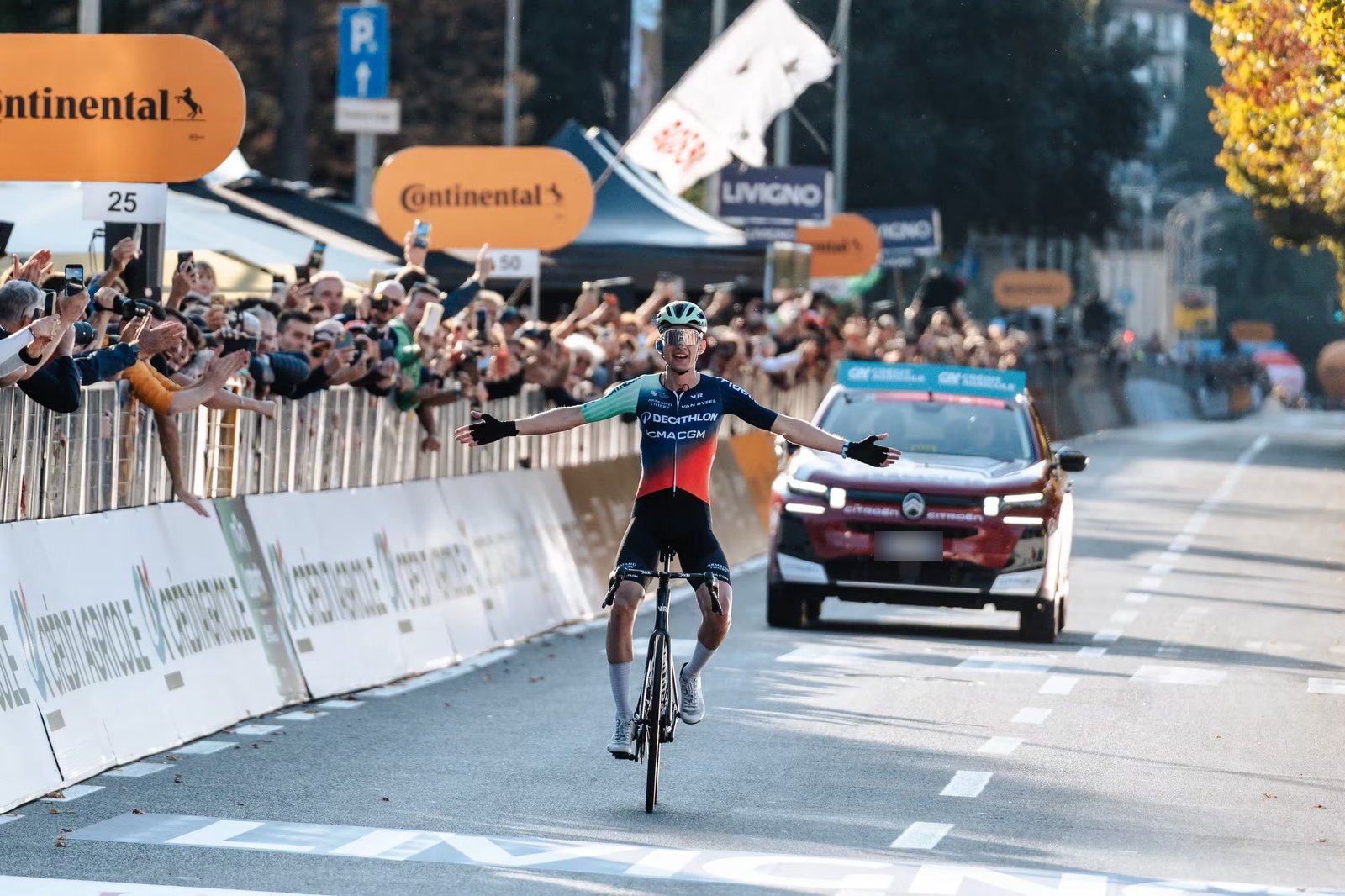
The bike has already been raced. Van Rysel says riders of its Decathlon CMA CGM team won a Monument (one of cycling's five biggest one-day classics) on it before launch, and Cyclingnews reports that Paul Seixas won Il Lombardia on a prototype.
The launch is on 5 January 2027, in Europe and the UK among other markets. Van Rysel says full prices, technical details, delivery times and availability by country will all be revealed on that day.
What we do not know yet
The launch left out several things a buyer needs:
- The price of each build. Only the range of €3,299 to €8,499 has been reported, and Van Rysel's own page shows no prices yet.
- Geometry and sizes. No stack and reach figures (how tall and how long the bike is), and no full size list.
- Tyre clearance. The widest tyre the frame takes has not been published.
- Wheels. Which wheels come with which build, and whether the rims are hooked or hookless, is not yet clear.
That last point matters more than it sounds. Hookless rims have a lower maximum tyre pressure, so check the rim's limit before you use our tyre pressure calculator or pump up for race day.
Road bike or triathlon bike?
This is the real question for most age groupers looking at a bike like this.
In a non-drafting race, where you must ride alone and keep your distance, almost all of your effort on the bike goes into pushing air out of the way, and your body makes far more of that drag than the frame does. A low, narrow position on a triathlon or time trial bike, or on aero bars, usually saves more time than a lighter frame. Most middle and long distance races in the Netherlands are flat and non-drafting, so weight counts for little there.
A light road bike makes more sense when:
- You want one bike for everything: club rides, sportives, winter training and racing.
- Your races are hilly, where weight starts to count on the climbs.
- You race draft-legal sprints, where riding in a group is allowed and triathlon bikes are often not. Draft-legal races also have their own rules on aero bars, so check them before fitting clip-ons.
If you do fit clip-on aero bars to a road bike, the saddle and bars usually need to move to keep you comfortable. Our bike size tool helps you check the frame size first, once Van Rysel publishes the geometry.
The 6.3 W claim
Van Rysel's page gives an aerodynamic gain of 6.3 W at 45 km/h over the previous generation, next to the frame's weight. The launch reports, Rennrad-News among them, say that figure was measured with a new aero bottle and cage that are sold separately, with turning legs and turbulence in the wind tunnel. So if you want the full gain, check whether it needs the bottle and cage too.
Keep the speed in mind. Drag rises steeply with speed, so at a typical age-group pace of 30 to 35 km/h the saving will be smaller than the headline figure. It is also a claim from the brand, not an independent test.
What to do now
- Do not buy blind. Wait for the per-build prices, the geometry chart and the tyre clearance. Van Rysel says they come on 5 January, so give yourself a few days to compare before you order.
- Decide what the bike is for. If it is your race bike for flat, non-drafting triathlons, compare it with an aero or triathlon bike at the same price, not just with other light road bikes.
- Allow time to adapt. A January delivery leaves a few months before the first spring races to get a bike fit and ride yourself in.
- Watch the current model. Bikes being replaced are often discounted. Our bike deals show today's prices from shops we track.
- Log it when it arrives. Add the bike to your garage so chain, tyre and service reminders start from day one.